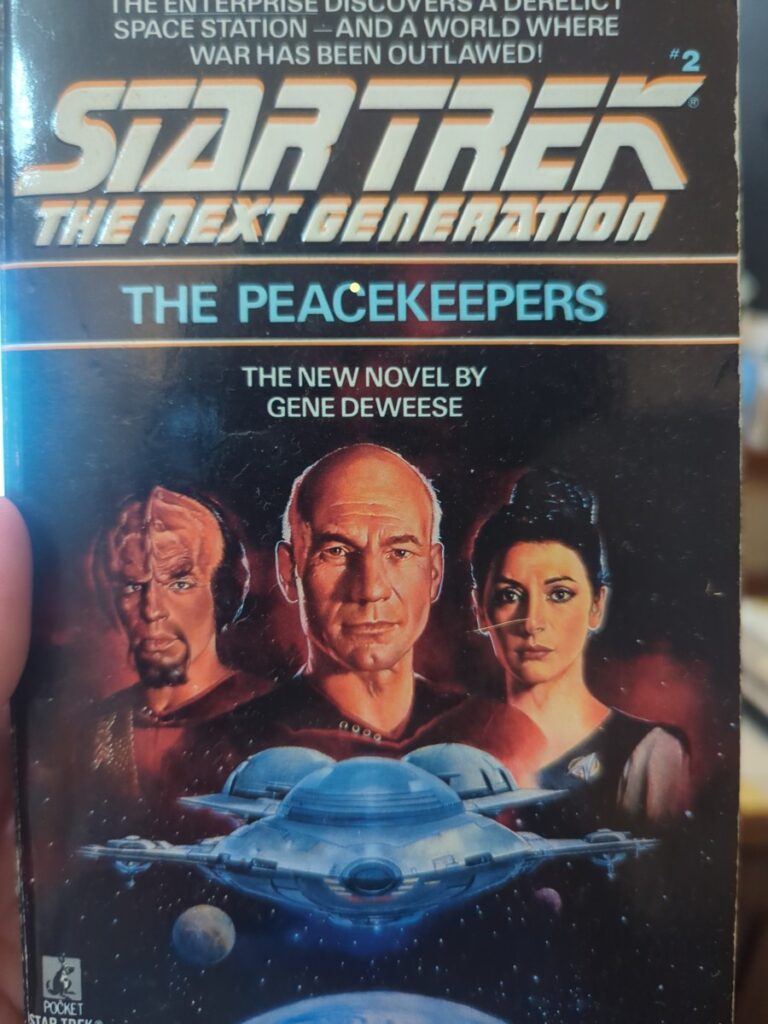
The Peacekeepers
by Gene Deweese
How prime is the Prime Directive, really?
It is the perennial quandary. In book #2 of our TNG series, we come to the question we have continued asking since the concept first went live on the air in TOS; the true trekkers (or at least those with an internet search bar open) will note this was originally referred to as General Order One and just grew from there, firming up later as the infamous non-interference policy of Star Fleet, the application of which is… often interpretive and spotty, but none the less is forever cropping up and demanding to be minded.
As a side note, I think the Prime Directive is a kind of golden rule for space travelers. When we imagine what we Earthlings hope is waiting for us in the universe, we at minimum ask that it not be violent and would allow us to develop on our own. And so we picture that in a space utopia we would do unto others as we would have them do unto us. We would look on from a distance until a species has gotten it’s own two feet under itself and be there to welcome it to the family when the time was deemed right.
This novel essentially purposes to illustrate by comparison that what is prime for Starfleet is not the same as what is prime for other technologically advanced races. The Peacekeepers imagines another way an advanced race may potentially handle interactions with lesser developed worlds. Where the Federation might purpose to try to allow worlds to develop without interference, the titular Peacekeepers are keepers of the peace empowered by an ancient and powerful alien technology, abandoned there as a gatekeeper device which, although left unattended, none-the-less caused the desired ends of limiting planetary development. “The Builders” believed in restraining lesser developed races to their home worlds and left behind a network designed to restrain planets from ever traversing the stars.
Characters in the story have their own goals and motivations towards what they believe is best for the bigger picture in the world. When presented with the power to enact that which they believe to be for righteous causes, they engage in acts they would never have otherwise consider and are able to rationalize it for the good they are doing. For the story’s leading characters on the planet, the action of ending all nuclear weapons comes at the cost of maintaining a tyranny and maintaining it requires very tiresome and isolating paranoia to prevent others from coming into control of the technology as well. In a way, the individual empowered by the technology in the end pursues a will beyond just his own and causes the very suppression the technology intended. When Geordi himself uses the alien technology in the course of the story (in the form of a skeletal helmet which attunes the user telepathically to the alien powers) the author does a good job of showing the subtle influence the alien technology has on Geordi. This is a question about technology at the root, too: As we are using technology, are we maybe also a vehicle of other forces of the technology itself or a tool for the minds behind the tech? Are we as users of the technology also molded and formed to other ends by adopting it? (‘my precious’… cough) I can’t help but see how this becomes more and more relevant in the ‘progress’ of our own technologies at present.
Another theme I picked out of this story was that of intuition. Throughout the story, Geordi must make things up as they go along. He asks Data to follow his lead. he explains that he is “playing it by ear”: he has to allow for he people he is suddenly caught up with to believe he represents one of the “Builders” of the powerful alien Repository of Gifts. But in truth he is learning from scratch about the past 50 years on this planet he and Data have been whisked to and about the global politics that have sprung up around one man’s control of the alien technology they found in orbit of the planet.
Intuition is how Data makes connections between what has been observed on their mission-gone-wrong and what he knows in his data banks of other recorded encounters with similar technologies. The likenesses lead to helpful general assumptions to work with.
Intuition is also what lead the tyrannical leader astray and took his actions to far. He always saw what he wanted to see and was affirmed in his actions by his own successes. His intuition about his closest supporter was wrong, and lead to his demise. His intuitions were blinded by self righteousness.
Telepathic intuition also leads to the means where Troi is able to detect the location of the missing away team. By understanding something about the technical nature of how the team was transported, and paying attention to what circumstances surround each one of her empathic detection of Riker’s mind, she can deduce a means to direct the Enterprise to their location.
In the wrap up of the tale, Data has an intuition as to how to help preserve the Prime Directive and the lives of many of the people of the pre warp civilization. Through observation of his friend, Geordi, the android has learned when to employ theatrics and deceit, in service to the goals of the mission.
The final beats of the story ask what intuition really is. Data is able to give a full account of the basis for drawing his conclusions and give reasons for why given actions may lead to likely outcomes. Geordi supposes this is just as good as intuition. Data is just able to have his processes for it out in the open where he can observe his own intuition, but is it that far off from what people are doing when they arrive at an actionable hunch?
Cue the credit theme song.
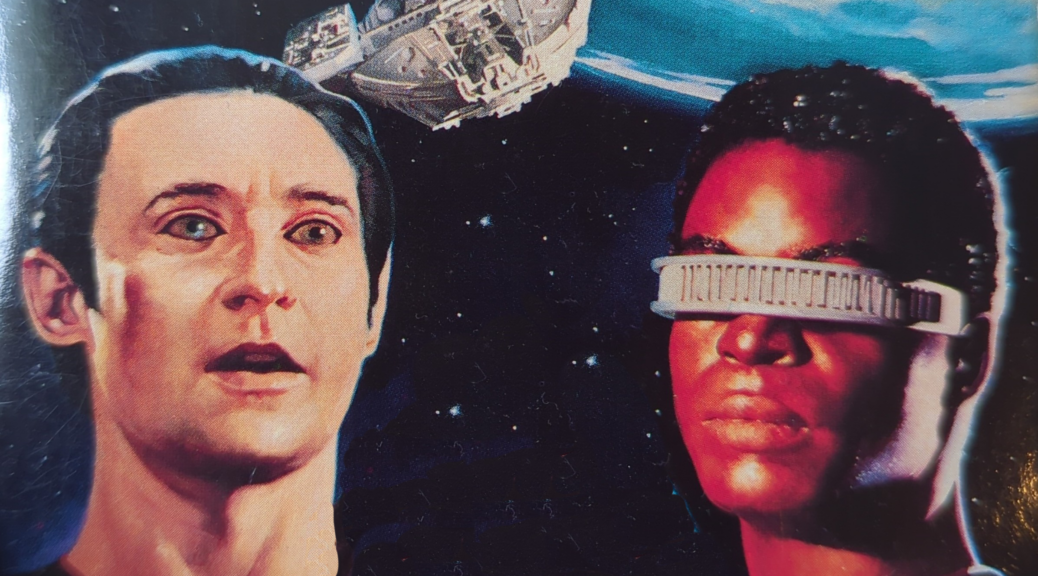
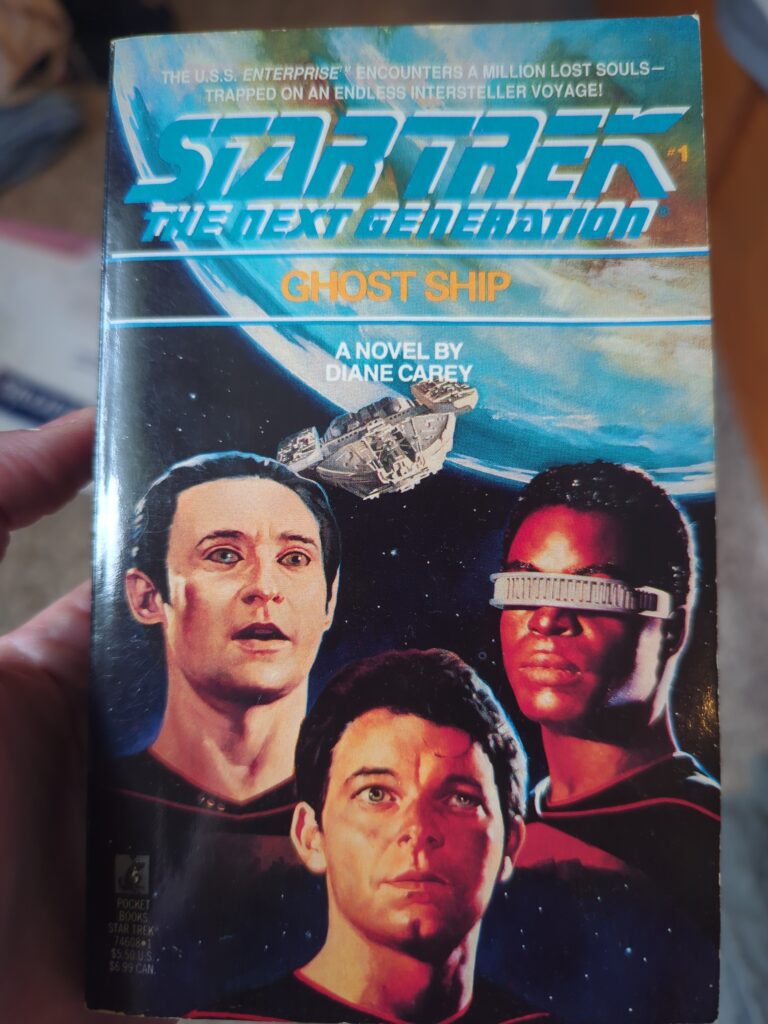
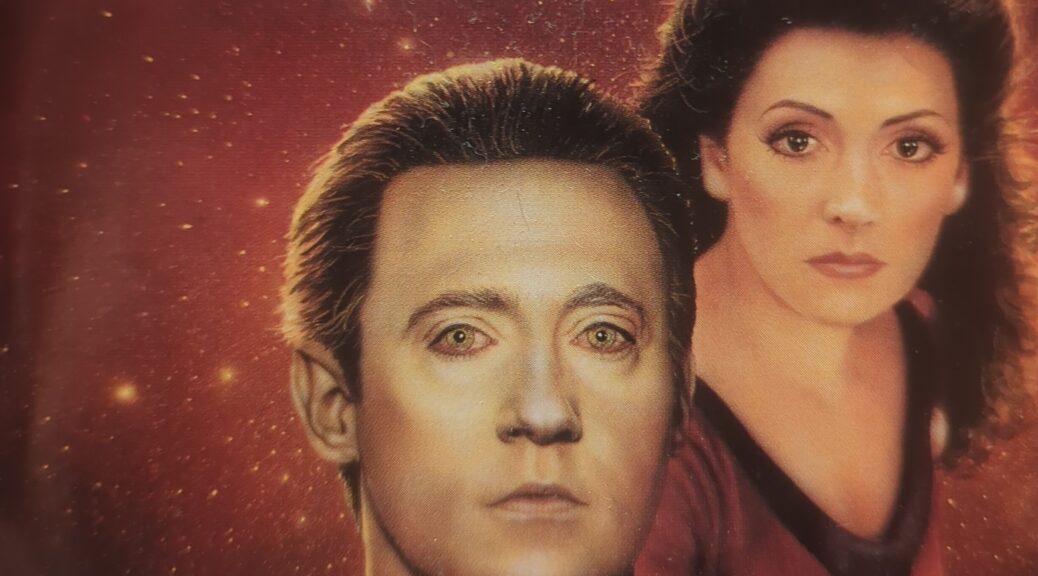
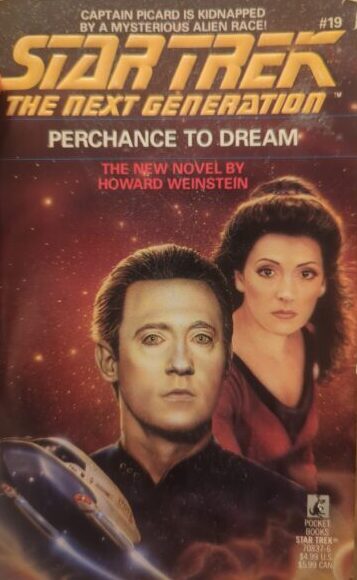
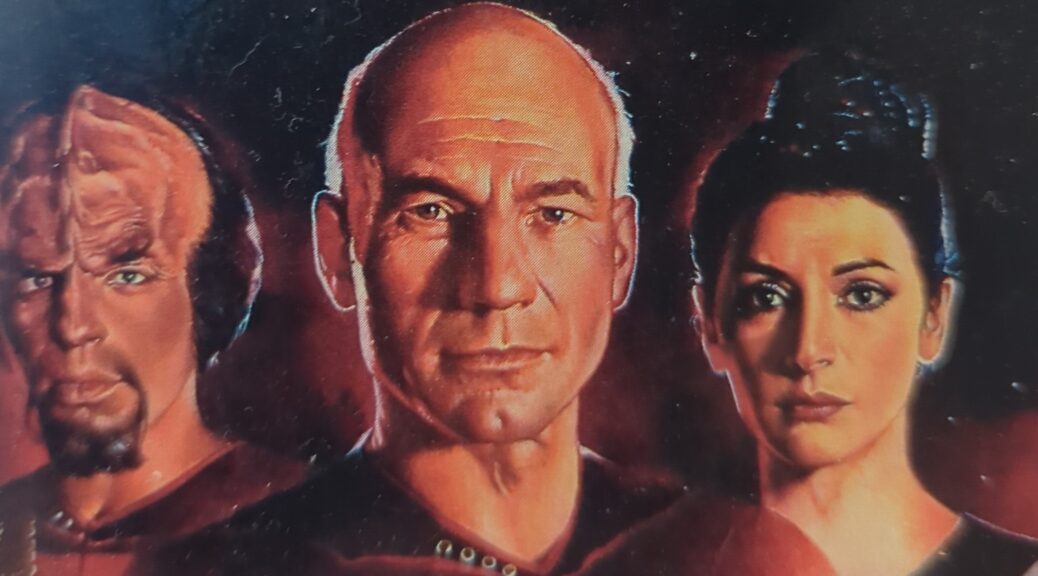
P.S. I’m gonna gripe about the cover. Once again, these are not the main characters of our story. This book’s ‘A plot’ follows Data and Geordi who should be front and center, with maybe Riker or Yar. The trio of Picard, Worf, and Troi are in the book but have relatively bit parts in the story. Ironically, you could probably swap novel #1 and #2 book covers and have a more accurate representation of the featured characters.
I appreciate that these covers must be oil paintings that the editors probably needed to order ahead of publication far in advance and are probably basing the art commissions on elevator pitches of the stories which probably changed in draft. I’m curious to see at what point the covers in this paperback series become more relevant to the story.